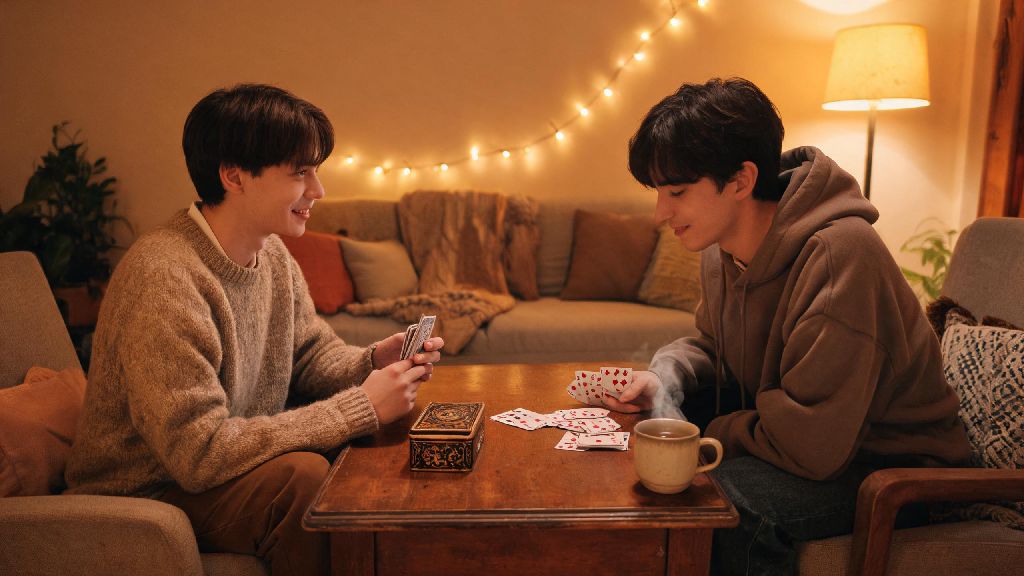
If you're tired of the same old Uno or Go Fish rounds at game night, or you want a classic two-player card game that balances luck and light strategy, gin rummy is a perfect pick. It doesn't require fancy equipment, just a standard deck of cards, and games usually last 10 to 15 minutes, so it's perfect for filling gaps between other activities or playing a quick round while waiting for dinner to cook. I've been teaching this game to friends for over 10 years, and I've broken down the process into simple, no-jargon steps that you can follow to play your first game in less than 15 minutes. Figuring out how to play gin rummy with cards can feel overwhelming at first, especially if you've only played other rummy variants before, but you'll get the hang of it faster than you think.
How to Play Gin Rummy with Cards: Core Setup and Pre-Game Rules
To start, you only need a standard 52-card deck (no jokers) and one other player. Before you deal, make sure everyone understands card values first, since this impacts almost every part of the game. Aces are always worth 1 point, number cards 2 through 10 are worth their face value, and face cards (jack, queen, king) are all worth 10 points each. That means high face cards are the riskiest to keep in your hand if they aren't part of a meld, since they add more to your deadwood count if someone knocks.
The dealer shuffles the deck and deals 10 cards to each player, one at a time, face down. The remaining cards go in the middle of the table as the draw pile, and the top card of the draw pile is flipped face up next to it to start the discard pile. Always sort your hand immediately after the deal to avoid missing potential melds early. Most people sort their hands by suit and rank, so it's easy to spot runs or sets at a glance.
Two types of melds count in gin rummy: sets, which are 3 or 4 cards of the same rank with different suits, and runs, which are 3 or more consecutive rank cards of the same suit. Gin rummy only uses valid melds of 3 or more cards – you can't count pairs or single cards as part of your melds later on. Once you've got your cards sorted, you're ready to follow the basic steps for how to play gin rummy with cards.
Step-by-Step Turn Rules for First-Time Players
If you're used to playing other rummy games, the turn structure for how to play gin rummy with cards is much simpler, no drawing multiple cards or passing around melds mid-game. Every turn follows the same three-step process, no exceptions. First, you draw one card: you can either take the top face-down card from the draw pile, or the top face-up card from the discard pile if it fits a meld you're building.
After you draw a card, you can choose to knock if your deadwood (the total point value of all cards not part of a valid meld) is 10 points or less. To knock, you lay down all your melds and your deadwood cards face up, then end your turn. If you have zero deadwood (all your cards are part of valid melds), that's called gin, and you automatically win the round before your opponent gets to play. Calling gin gives you an automatic 25-point bonus on top of your opponent's deadwood count, so it's always worth holding out for if you're only one card away.
If you don't knock, you end your turn by discarding one card from your hand face up on top of the discard pile. You can never discard the exact card you just pulled from the discard pile on the same turn – if you pick up a discard, you have to keep it in your hand for at least one full turn. Once you discard, your opponent starts their turn, and the cycle repeats until someone knocks or the draw pile runs out. If the draw pile runs out with no knock, the round ends in a draw, no points are awarded, and you re-deal.
Common Gin Rummy Mistakes New Players Should Avoid
Even if you follow all the basic rules, small mistakes can cost you games when you're starting out. From what I've seen, 90% of new player losses come from 3 avoidable errors:
Let's break these down so you can skip the frustrating learning curve. Holding a king for 4 turns hoping for another two kings usually isn't worth it, because if your opponent knocks, that's 10 extra points added to your deadwood. The same goes for picking up random discards: if you pick up a 9 of spades to complete a partial run, but that leaves you with 18 points of deadwood, you're putting yourself at a big risk of losing if your opponent knocks first.
Tracking your opponent's discards tells you what melds they're working on too. If they pick up a 7 of hearts, they're likely building a run in hearts or a set of 7s, so you don't want to discard any cards that fit those melds later. If you're unsure whether to keep a high deadwood card, discard it – the risk of carrying extra points almost always outweighs the small chance you'll draw the matching card to make a meld. These small errors are easy to fix, and once you avoid them, you'll be far better at how to play gin rummy with cards than most first-time players.
Simple Strategies to Win More Casual Gin Rummy Games
You don't need to memorize complex card counting systems to get good at how to play gin rummy with cards, just a little bit of awareness goes a long way. First, learn when to knock vs when to hold out for gin. If your deadwood is 8 points, but you're only one card away from gin, it's worth waiting a turn or two, but if you're 3+ cards away, just knock to avoid your opponent getting gin first. The upside of knocking early is that you lock in a win before your opponent can finish their melds, but the downside is you miss out on the 25-point gin bonus if you were close to finishing all your melds.
You can also bluff with your discards to throw your opponent off. If you're building a run of spades, discard a low spade early on to make them think you don't need any spade cards, so they'll be more likely to discard the spade you need later. Just make sure you don't discard a card you actually need, obviously.
Always leave at least one low-value "discard card" in your hand so you don't get stuck having to throw a card your opponent can use to finish their melds. For example, keeping a 2 of clubs that doesn't fit any of your melds gives you a safe discard option if you draw a high-value card that you don't want to keep. This small trick will save you from losing rounds to undercuts more times than you can count.
At the end of the day, gin rummy is meant to be fun, so don't stress too much about winning your first few games. It's totally normal to accidentally keep too much deadwood or discard a card your opponent needed when you're starting out. Once you get the hang of how to play gin rummy with cards, you can start experimenting with different strategies, house rules, and even variant play to keep things interesting. I've had some of my best game night memories playing gin rummy for hours with friends, and I hope you do too.