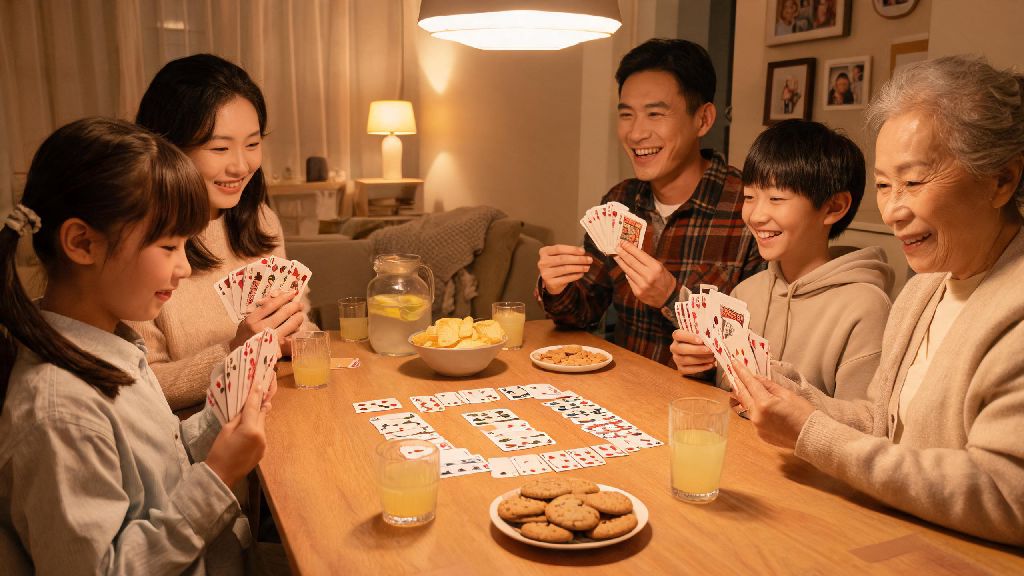
2026 has brought a huge resurgence in low-cost, screen-free home activities, and rummy tops the list for casual game nights that work for kids, adults, and multi-generational gatherings alike. If you’ve ever wondered how to play rummy at home without fancy equipment or complicated rule books, you’re in the right place. I’ve been hosting monthly rummy nights with my friend group for three years, and I’ve narrowed down the easiest way to set up, play, and adjust rules to fit whatever group you’re hosting. You don’t need any prior experience to join in, and most new players pick up the basic rules in less than 10 minutes.
How to Play Rummy at Home: Basic Setup for 2026 Game Nights
The best part of home rummy is that you barely need any supplies to get started. I’ve hosted games on my dining table, my apartment’s fire escape, and even a picnic blanket in the park, and the setup stays the same every time. Before you start dealing cards, make sure you have these four things on hand:
Once you have your supplies gathered, shuffle the deck well and assign a dealer. For casual games, I usually let the youngest person at the table be the first dealer to keep things fun, but you can also draw for the highest card to pick who goes first. You don’t need to buy a special rummy set to play at home – any old standard deck you have lying around the house works perfectly, even if it’s missing one card (just swap it out for a joker you don’t plan to use, or leave it out entirely and adjust the deal count by one card per person).
Simple Gameplay Rules to Follow for Casual Home Rummy
Official tournament rummy has a lot of nitpicky rules, but you can ignore almost all of them for home games if you want to keep things low-pressure. The core goal of the game stays the same no matter what rules you adjust: get rid of all the cards in your hand by forming them into valid melds. There are two types of valid melds you can make.
A set is three or four cards of the same rank, from different suits – for example, three 7s (one heart, one diamond, one spade) or four queens of all four suits. You can’t have two cards of the same suit in a set, since that would count as a duplicate.
A run is three or more consecutive cards of the same suit – for example, 5, 6, 7 of hearts, or 10, Jack, Queen, King of clubs. Aces can count as low (below a 2) or high (above a King) in runs, but you can’t wrap around, so a run of Queen, King, Ace, 2 doesn’t count.
Once everyone understands what a valid meld is, gameplay is super simple. The dealer passes out 10 cards per person if you have 2 to 3 players, or 7 cards per person if you have 4 to 5 players. The rest of the deck goes face down in the center as the draw pile, and you flip the top card face up next to it to start the discard pile. On each player’s turn, they draw one card either from the top of the face-down draw pile or the top of the face-up discard pile, then discard one card from their hand to the discard pile. When a player has all their cards formed into valid melds, they can lay down all their cards, discard their final card, and win the round.
For scoring, face cards (Jack, Queen, King) are worth 10 points each, aces are worth 1 point each, and number cards are worth their face value (a 5 is worth 5 points, for example). When someone wins the round, every other player adds up the points of the cards left in their hand, and that total is added to the winner’s score. You can play to 100 points, 250 points, or whatever number fits the time you have for game night. I usually play to 100 points for weeknight games, since that only takes about an hour to finish.
Fun 2026 Variations to Mix Up Your Home Rummy Games
If you’ve been playing basic rummy for a while and want to switch things up, there are tons of easy variants you can try without learning a whole new set of rules. I test out a new variant at every one of my monthly rummy nights, and these are the ones that have been the biggest hits with my group so far this year.
Pro tip for 2026 game nights: Try “joker rummy” where you assign two random cards as wild cards at the start of each round. Wild cards can stand in for any card you need to complete a meld, so if you have two 8s and a wild card, you can use that wild card as a third 8 to make a valid set. This variant is perfect for new players or groups with kids, since it makes it much easier to form melds and keep the game moving fast. I tried this at my 2026 New Year’s party, and even the guests who had never played rummy before won at least one round.
If you’re playing with 4 people, try gin rummy, where you don’t lay down your melds until you’re ready to go out entirely. It’s a little more strategic than basic rummy, and works great for couples game nights where you want a little friendly competition. If you want longer, more laid-back games, try Rummy 500, where you can lay down melds at any point during your turn, not just when you’re ready to go out. You can also play in teams of two, so newer players can pair up with more experienced players to learn the ropes without feeling pressured.
For groups that love silly, low-stakes fun, try “penalty rummy” where if you discard a card that another player could use to complete a meld, they can call “rummy” and take that card for free. It adds a silly, unexpected element to the game, and leads to a lot of playful teasing between friends.
Common Mistakes to Avoid When Playing Rummy at Home
After hosting dozens of rummy nights over the past few years, I’ve seen a lot of small mistakes that kill the fun for new players, and they’re all super easy to avoid if you plan ahead. The biggest mistake I see is people enforcing super strict official tournament rules for casual home games, which makes new players feel self-conscious about making mistakes. You don’t have to follow every official tournament rule for home games – it’s totally fine to adjust rules to fit your group’s skill level. For example, if you’re playing with kids under 10, you can let them use two wild cards per meld instead of one to help them keep up, or skip the scoring entirely and just play for fun.
Another common mistake is holding onto low-value cards for too long hoping to complete a run. If you have a 3 and 4 of diamonds and haven’t drawn a 2 or 5 of diamonds after three turns, it’s almost always better to discard one of those cards and focus on building a different meld. I used to make this mistake all the time, and I’d end up with 20+ points of unplayed cards in my hand at the end of almost every round.
Never call out a new player for making a mistake like discarding a card they could have used to make a meld, or forgetting to draw a card at the start of their turn. The point of home rummy is to spend time with people you like, not to win at all costs, and calling out mistakes will make new players not want to join in again. If you see a new player making a mistake, you can quietly offer them a tip if they seem open to it, but don’t pressure them to take your advice.
The last mistake I see all the time is forgetting to switch up the rules every few rounds. Even if your group loves basic rummy, trying a new variant every once in a while keeps the game fresh and makes people more excited to come back to future game nights. I usually ask the group if they want to try a new variant halfway through every game night, and most of the time everyone is open to it.
Whether you’re planning a quiet date night at home, a multi-generational family gathering, or a casual hangout with friends, learning how to play rummy at home is one of the most low-effort, high-fun activities you can add to your 2026 activity rotation. You don’t need fancy gear, expensive subscriptions, or previous experience to get started – just grab a deck of cards, invite a few people over, and adjust the rules to fit whatever makes your group happy. I’ve had groups that prefer super competitive, fast-paced games, and groups that prefer slow, laid-back games where we talk more than we play, and rummy works for both. Next time you’re stuck for game night ideas, give rummy a try – you might be surprised how addictive it is.