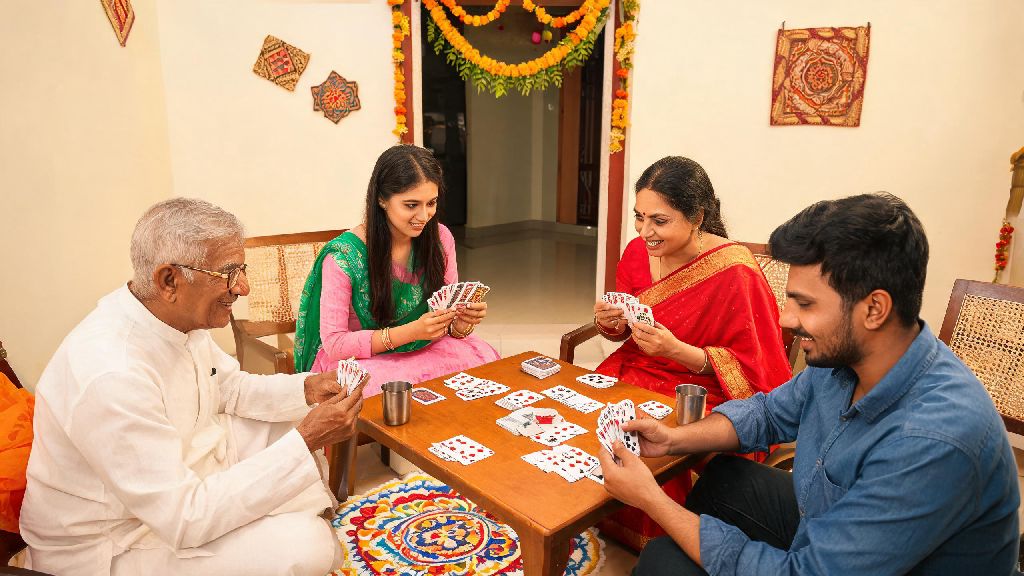
If you’re a Telugu speaker looking to pick up a fun, social card game that also lets you win small rewards in local 2026 tournaments, you’ve probably searched for how to play rummy card game in telugu at least once. A lot of existing guides either use complicated English jargon or skip over regional terms that make the rules easier to grasp for native speakers, so we put together this no-fluff guide using everyday Telugu terms and simple examples anyone can follow. You don’t need any prior card game experience to get started, and we’ve included common mistakes most new Telugu players make so you can skip the frustration of losing your first few games unnecessarily.
Core Rummy Rules Translated Clearly for Telugu Players 2026
First, let’s get the basic terminology right, because most English guides refer to things that don’t have a direct one-to-one translation, but we’ve mapped them to the terms you’ll hear at local rummy gatherings in Andhra Pradesh and Telangana. I’ve played rummy at dozens of family functions and local club meets over the years, so these terms are the ones actual players use, not formal translations you’ll only find in textbooks. Below are the three core basics you need to memorize before you play your first round:
Don’t forget that a valid hand must have at least two sequences, and one of those sequences has to be a pure sequence – that means no jokers used to fill gaps in the sequence. I’ve seen dozens of new players lose their first game just because they forgot this pure sequence rule, so don’t skip this step when you’re checking your hand. For example, a pure sequence could be A,2,3 of hearts, no jokers included, while an impure sequence could be 7,8,Joker of spades, where the joker fills the spot of the 9 of spades.
Step-by-Step Process to Play Your First Rummy Game in Telugu
Now that you know the basic terms, let’s walk through a full round the way you’d play it with friends at a 2026 Sankranti gathering or local club. First, the dealer shuffles both decks and deals 13 cards to each player, face down, then places the remaining cards in the center as the closed deck, with one card turned face up next to it as the start of the discard pile. One random card is also selected as the wild joker for the round – any card of the same rank and different suit can be used as a joker, plus the printed jokers in the deck.
On your first turn, you can choose to pick the face up discard if it fits into your planned sequences or sets, or pick a random card from the closed deck. It’s usually better to avoid picking from the discard pile in the first 3 turns, because other players can see what card you took and guess what sequences you’re building, giving them an advantage. Once you pick a card, you have to discard one card you don’t need, so other players can pick it on their turn. If you want to practice these steps for free before playing with real money, you can try free 2026 Telugu rummy practice games that have built-in rule checks to make sure you don’t make invalid declarations.
As the round goes on, you’ll slowly build your sequences and sets by picking useful cards and discarding ones you don’t need. Once you have all 13 cards arranged into valid sequences and sets, you can declare your hand by placing your cards face up on the table, with one final discard. The other players will check your hand for validity, and if it’s correct, you win the round and get zero penalty points, while other players get points equal to the value of their unmatched cards.
Common Mistakes Telugu New Rummy Players Make (And How to Avoid Them)
Even if you memorize all the rules, it’s easy to make simple errors when you’re playing your first few games, especially if you’re playing with more experienced friends in 2026 local matches. The most common mistake we see is players holding onto too many high-value cards like Kings, Queens and Aces for too long, hoping to build a sequence with them later. If another player declares before you, you’ll get penalty points equal to the value of all your unmatched cards, so discard high-value cards you can’t use within the first 5 turns to keep your penalty low if you lose.
Another common mistake is using jokers for your pure sequence. Remember, a pure sequence can’t have any jokers, so save your jokers for impure sequences or sets instead. We also see a lot of new players declare their hand before checking for validity, which leads to an automatic 80-point penalty – that’s the maximum possible penalty, so it’s always worth taking 10 extra seconds to double check your sequences and sets before you declare.
Don’t get frustrated if you make these mistakes at first. I lost my first 7 games of rummy when I was learning, mostly because I kept forgetting the pure sequence rule. Just take note of what you did wrong, and adjust for the next round. You’ll get the hang of it faster than you think.
How to Play Rummy Card Game in Telugu for 2026 Local Tournaments
If you’ve mastered casual play with friends and want to try local 2026 rummy tournaments held in cities like Hyderabad, Vijayawada and Visakhapatnam, there are a few extra rules you need to know that don’t apply to casual home games. First, most local tournaments have a time limit per turn, usually 15 to 30 seconds, so you can’t take minutes to decide which card to pick or discard. Practice making fast decisions in free practice games first so you don’t get timed out during tournament play.
Also, tournament rummy games usually have higher penalty points for invalid declarations, sometimes up to 100 points, so the rule of double checking your hand before declaring is even more important here. Most 2026 Telugu rummy tournaments also prohibit any verbal communication about your cards during the game, so you can’t ask other players for hints or mention what cards you’re looking for, even in Telugu. Breaking this rule can lead to disqualification, so keep conversation limited to non-game topics during play.
Many small local tournaments also have entry fees as low as ₹100, with prizes for top 3 players ranging from ₹500 to ₹10,000 depending on the size of the event. They’re a great way to test your skills and meet other rummy players in your area, so don’t be afraid to sign up for a beginner-level 2026 tournament once you feel confident with the rules.
Whether you’re playing for fun with family at home or competing in small local tournaments, learning how to play rummy card game in telugu is a great way to pass time and connect with other players in your community. Take it slow at first, practice the basic rules, and don’t get discouraged if you lose your first few rounds – even the most experienced rummy players started exactly where you are in 2026. Once you get the hang of it, you’ll find it’s one of the most engaging, rewarding card games you can play with friends and family.