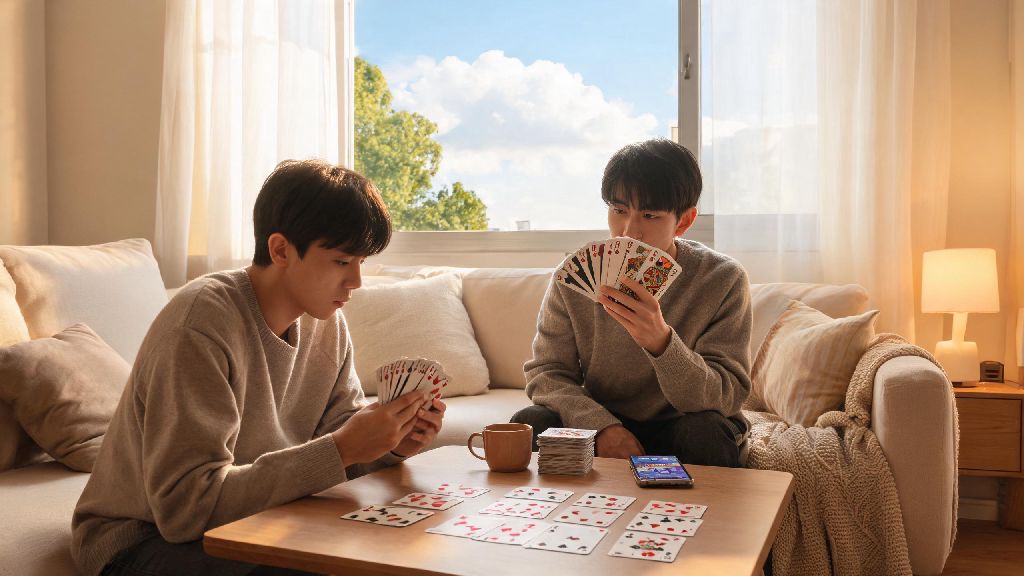
If you’ve ever tried to play rummy with a big group and felt overwhelmed by all the competing rules and long wait times between turns, you’re not alone. 2026 has seen a huge surge in small-group card game popularity, and one of the most requested guides we get is how to play rummy for 2, no extra players or complicated house rules required. It’s fast, low-effort to learn, and works just as well for a lazy Sunday at home as it does for warm-up rounds before a local or online rummy tournament. Even if you’ve never played rummy before, you can pick up the core rules in less than 10 minutes.
Core Rules for How to Play Rummy for 2 (2026 Official Updates)
Most casual 2 player rummy games use a standard 52-card deck, no jokers, though some online platforms in 2026 let you add 1-2 jokers as wild cards for a more dynamic game. The dealer deals 10 cards to each player, face down, and places the remaining deck in the middle of the table as the draw pile. The top card of the draw pile is flipped over to start the discard pile next to it. Your core objective is to form all your cards into valid melds before your opponent does, and the 2026 official rules have clear definitions for what counts as a valid meld:
You can lay down melds on your turn once you have at least one pure sequence, and you can add cards to your opponent’s already laid melds to get rid of extra cards too. That means you don’t have to form all melds entirely from your own hand, which speeds up game play a lot for 2 player rounds.
Step-by-Step Gameplay Flow for 2 Player Rummy
Every turn follows the same simple structure, so you don’t have to memorize complicated turn order rules. First, you draw one card: you can either take the top face-down card from the draw pile, or the top face-up card from the discard pile. You can only take the discard pile card if you have an immediate use for it in a meld, though casual games don’t usually enforce this rule unless you’re playing for stakes. Don’t discard high value cards early if you’re close to forming a sequence with them, because your opponent can pick them up and meld them to cut your lead short.
After you draw a card, you can choose to lay down any valid melds you’ve formed, as long as you have at least one pure sequence to show first. You can also add any extra cards you have to existing melds (yours or your opponent’s) during this step. Once you’re done melding, you discard one card from your hand to the discard pile to end your turn.
The round ends when one player has melded all their cards, with at least one pure sequence. Scoring is simple: face cards (Jack, Queen, King) are worth 10 points each, aces are worth 1 point, and number cards are worth their face value. The losing player adds up the points of all their un-melded cards to their total score, and the first player to reach 100 total points loses the full match. Most 2026 online 2 player rummy platforms use this exact scoring structure for casual and low-stakes competitive ladders, so it’s worth memorizing.
Beginner-Friendly Strategies to Win More 2 Player Rummy Games
You don’t need to be a professional rummy player to win most casual 2 player games, just a few simple strategies will give you a big edge over new players. Keep a mental note of every card your opponent picks up from the discard pile – that tells you exactly what sequences or sets they're building, so you can avoid discarding cards they need. For example, if you see them pick up a 7 of hearts, don’t discard a 6 or 8 of hearts unless you’re 100% sure you’re about to win the round.
Prioritize building a pure sequence first, no exceptions. A lot of new players waste time building sets first, then get stuck without a pure sequence when their opponent wins the round. Even if you have three full sets ready to go, you can’t win without that pure sequence, so it should always be your first goal. I’ve noticed that in 2026, a lot of new online 2 player rummy players make the mistake of melding all their cards as soon as possible, but sometimes holding a small meld back can trick your opponent into discarding the exact card you need to finish your hand.
Don’t hold onto high value face cards for too long. If you’ve had a king and queen of spades for 4 turns and haven’t drawn a jack or ace, discard them before your opponent can win and leave you with 20 extra points on your score. If you’re playing with jokers, save them for high value missing cards instead of low ones, so you minimize your point loss if you end up losing the round.
Common Mistakes to Avoid When Playing 2 Player Rummy in 2026
Even players who know the basic rules often make avoidable mistakes that cost them rounds. The most common one is forgetting the pure sequence requirement. Never assume you can win with only sets and impure sequences, that’s the number one reason new players lose rounds they should have won. Double check that you have a pure sequence before you start planning your win.
Another common mistake is drawing from the discard pile when you don’t actually need the card. A lot of players do this just to see what the card is, but it tells your opponent exactly what you’re building, and you waste a turn drawing a card you don’t have a use for. Only take from the discard pile if the card fits directly into a meld you’re actively building.
Don’t ignore your opponent’s play style. If your opponent is super aggressive and melds early, you should play more defensively, discard low value cards so you don’t lose big if they win fast. If they’re more cautious and hold onto cards for multiple turns, you can take more risks to build your melds faster. If you’re playing online, don’t ignore the time limit either – most 2026 platforms have a 30 second per turn limit for 2 player rummy, so you don’t want to run out of time and lose your turn by overthinking.
Whether you’re looking for a low-stakes game to play with your partner on date night or you want to qualify for small 2026 online rummy prize pools, mastering how to play rummy for 2 is one of the most useful card game skills you can pick up this year. Start with the basic rules, practice the strategies we covered, and don’t get discouraged if you lose your first few rounds – even the best rummy players started where you are. Next time you have a free hour and a friend to play with, grab a deck of cards and test out what you’ve learned, you might be surprised how quickly you pick it up.