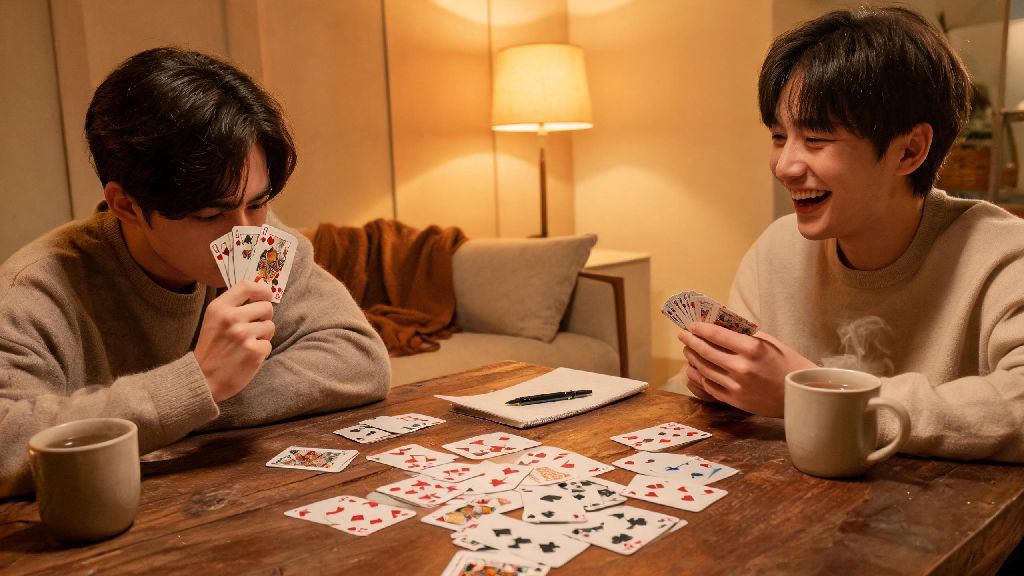
If you’ve ever had a lazy afternoon with a friend, a single deck of cards, and zero plans for how to pass the time, you’ve probably wondered if there’s a low-effort, high-fun game you can pick up in minutes. Rummy is one of the most beloved card games worldwide, and you don’t need a big group to enjoy it. Learning how to play rummy with two players is far simpler than most people assume, and it works just as well for casual hangouts as it does for friendly competitive matches. You don’t need any special equipment, just a standard 52-card deck, a way to keep score, and 15 to 30 minutes of free time.
Pre-Game Setup for Two-Player Rummy
You don’t need fancy gear to get a game going, but getting the setup right first will prevent interruptions once you start playing. First, grab a standard 52-card deck, no jokers required for standard two-player rummy. If you prefer a faster game, you can add 1 or 2 jokers as wild cards, but make sure both players agree to this before dealing. Follow these quick steps to get your table set up in under a minute:
If the first face-up card is a joker (if you’re using them), flip the next card from the draw pile on top of it to start the discard pile. You’ll also want a pen and paper, or a notes app on your phone, to track scores after each round. Many new players skip prepping a score tracker first, but it’s easy to lose track of points if you play multiple rounds back to back. Always confirm wild card rules before dealing to avoid confusion later on. Oh, and make sure you’re sitting across from each other so neither of you can accidentally glance at the other’s hand. That small step avoids a lot of unnecessary arguments mid-game.
Core Rules for How to Play Rummy with Two Players
Once setup is done, you’re ready to start playing. The goal of rummy, no matter how many players you have, is to form valid combinations of cards called sets and runs, and get rid of all your cards before your opponent does. A set is 3 or 4 cards of the same rank, but different suits, like three 7s of hearts, diamonds, and clubs. A run is 3 or more consecutive cards of the same suit, like 5, 6, 7 of spades. If you’re using jokers, they can stand in for any missing card in a set or run, but most casual players limit wild cards to one per combination to keep the game fair.
Each turn follows the same 3-step structure, and it goes back and forth between players until someone goes out (gets rid of all their cards). First, you draw one card, either from the top of the face-down draw pile or the top of the face-up discard pile. You can pick the top discard even if you don’t plan to use it right away, but most players only grab it if it fits an in-progress combination. Then, once you’ve drawn a card, you can choose to lay down any valid sets or runs you have in your hand, if you want to. You don’t have to lay down your combinations as soon as you make them, and many experienced players hold off to hide their strategy from their opponent.
Finally, you discard one unwanted card from your hand face up on top of the discard pile, ending your turn. You cannot end a turn with more than 13 cards in your hand, so make sure you always discard one card after drawing. When you’re learning how to play rummy with two players, this turn structure will become second nature after 2 or 3 rounds. There’s one key rule that trips up new players: you cannot pick up the same card you just discarded on your next turn. That prevents players from dragging the game out by cycling the same useless card back and forth. If you discard a card by mistake, you can take it back only if your opponent hasn’t drawn their next card yet. Once they’ve picked their card for the turn, your discard is final. Sets and runs need a minimum of 3 cards each to be valid, so don’t try to lay down a pair and call it a set, that won’t count.
Simple Scoring Rules for Casual Two-Player Matches
Scoring for two-player rummy is straightforward, and you only calculate points once one player has gotten rid of all their cards (called going out). The player who goes out gets zero points for the round, and their opponent gets points based on the cards left in their hand. Face cards (king, queen, jack) are worth 10 points each, aces are worth 1 point each, and numbered cards are worth their face value – so a 5 is worth 5 points, a 9 is worth 9 points, and so on. If you’re using jokers, they are usually worth 15 points each, which is why holding onto a joker you can’t use is a big risk late in the round.
The goal of the full game is to have the lowest total score across all rounds. Most casual players play until someone hits 100 total points, and the player with the lower score at that point wins the whole game. You can adjust that threshold if you want a shorter or longer game, of course – 50 points works for quick 15-minute matches, while 200 points is perfect for a lazy afternoon of back-and-forth play. If you’re new to how to play rummy with two players, start with the standard scoring rules before adding any house bonuses.
One common house rule many people use is that you have to lay down at least one valid combination before you can go out. That stops players from dumping their entire hand of uncombined cards on the first turn, which makes the game far more fun for both sides. You can also add a bonus of 25 points to the winner’s score if their opponent has more than 50 points left in their hand when they go out, to reward dominant play. But that’s totally optional, and you can tweak rules as you like as long as both players agree before you start. Jokers left in your hand at the end of a round will cost you 15 points each, so don’t hang onto them unless you’re sure you can use them quickly.
Pro Tips to Win More Two-Player Rummy Games
Once you’ve got the basic rules down, you can pick up small tricks to give yourself an edge over your opponent, without taking the fun out of the game. First, pay close attention to the cards your opponent picks up from the discard pile. If they pick up a 10 of hearts, you can bet they’re either building a set of 10s or a run of hearts that includes a 10, so you should avoid discarding any other 10s or adjacent heart cards (like 9 or Jack of hearts) if you can help it.
It’s also a good idea to hold onto low-value cards early in the game, instead of discarding them right away. If the game ends suddenly, you’ll have fewer points left in your hand, so even if you lose the round, you won’t take a big hit to your total score. Many new players make the mistake of discarding all their low cards first to build fancy high-value runs, and end up losing 30 or 40 points unnecessarily when their opponent goes out early.
If you’re playing with jokers, use them as soon as you can to complete a combination, instead of saving them for a better run that might never happen. A joker used to complete a 3-card set now is far better than a joker stuck in your hand costing you 15 points later. One underrated trick is to discard cards that are close in rank to ones you’ve already thrown. For example, if you discarded a 7 of clubs a few turns ago, discarding an 8 of clubs later is less likely to be useful to your opponent, since they didn’t pick up the 7 when it was available.
That said, don’t get too predictable with your discards, or your opponent will quickly figure out what combinations you’re building. And don’t be afraid to prioritize minimizing points over winning a single round if your hand is really bad. If you have almost no valid pairs or consecutive cards after the first three turns, focusing on getting rid of high-value face cards first will keep your total score low enough to win the full game. Tracking your opponent’s discards is just as important as managing your own hand, so don’t zone out when it’s their turn.
Two-player rummy is one of the most versatile, easy-to-learn card games you can play, and it’s perfect for everything from rainy day hangouts to long car rides with a friend. You don’t need any special skills or equipment to get started, and you can tweak the rules to match your preferred pace and level of competition. Whether you’re playing for fun or for small friendly stakes, taking the time to learn how to play rummy with two players will give you a go-to activity you can pull out any time you have a friend and a deck of cards handy. Start with the basic rules first, then add small house rules and strategy tricks as you get more comfortable, and you’ll be winning matches before you know it.