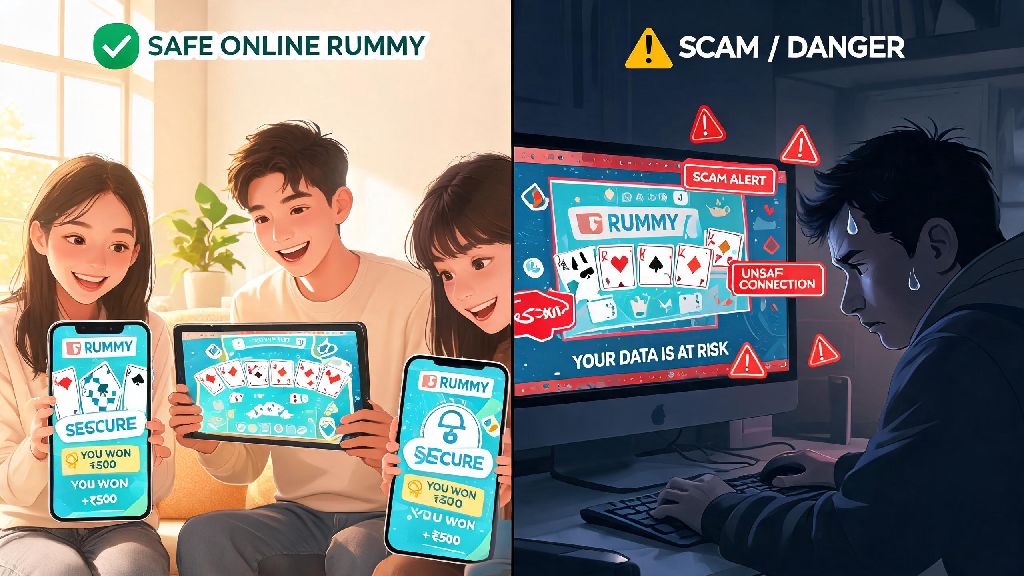
If you’ve scrolled through social media lately, you’ve probably seen dozens of ads for online rummy platforms promising big cash wins for just a small entry fee. It looks fun, easy, and like a great way to pass the time while earning a little extra money, but you’ve likely also heard horror stories of players getting scammed out of their deposits or having their personal data leaked. The first question almost every new player asks is is online rummy safe, especially when real money is on the line. I’ve tested more than 12 popular online rummy sites and apps over the last four years, both for fun and for side income, so I know exactly what red flags to watch for and what safety checks matter most.
What Makes Players Question Is Online Rummy Safe in the First Place?
It’s not unfair to be skeptical of online rummy, especially if you’re new to real money online gaming. For every reputable platform that operates fairly, there are three or four unregulated apps that exist only to scam new players out of their money. 90% of reported online rummy scams come from unregulated apps that don’t hold valid gambling licenses, according to recent industry surveys of online card game players. Most of these scams fall into a few common categories: rigged games that make it impossible to win after your first deposit, withdrawal holds that keep your funds locked indefinitely, and data breaches that leak your personal and payment information to bad actors. So you aren’t being paranoid for double-checking a platform before you hand over your credit card details, that’s just common sense.
Core Safety Checks to Verify Before You Sign Up for Any Rummy Site
The good news is that you don’t need to be a tech expert to tell a safe rummy platform from a scam. There are four simple checks you can run in two minutes or less that will filter out 99% of unsafe options. I run these same checks every time I test a new platform, and I’ve avoided dozens of scams because of them. Here’s what to look for:
If a platform fails even one of these checks, walk away immediately. I made the mistake of skipping these checks a few years ago when I signed up for a random rummy app I saw on an Instagram ad. I won $120 in my first week, but when I tried to withdraw my winnings, the support team kept asking for more and more ID documents before eventually ignoring my messages entirely. I never got that money back, and I’ve never skipped these checks since. Never share your ID or payment details with a platform that can’t show proof of licensing first, no matter how good their welcome bonus looks.
Common Risks of Playing on Unsafe Rummy Platforms
Even if you don’t plan on depositing a lot of money, playing on an unregulated rummy platform can come with serious consequences that go far beyond losing a few dollars. A friend of mine signed up for an unlicensed rummy app last year to play with his coworkers, and he ended up having his credit card details leaked. He had to cancel his card and spend three months disputing $500 in fraudulent charges that popped up a week after he made his first deposit. Unregulated rummy apps often sell your personal data to third-party marketing firms, leading to months of unwanted calls and messages for other gambling products and scams. You also run the risk of playing rigged games that are programmed to make you lose almost every round once you’ve deposited more than $50. A lot of these apps will let you win small amounts at first to get you hooked, then adjust the RNG so you can’t win anything significant no matter how good your rummy skills are. Any bonus that requires you to wager more than 10x your deposit amount before you can withdraw is almost always a trap designed to keep you playing and depositing more money until you’ve lost all your funds. You should also avoid any platform that asks for unnecessary personal information, like your social security number or copies of your utility bills, for a basic account signup.
Simple Habits to Keep Your Online Rummy Play Safe Long-Term
Even if you’re playing on a fully licensed, reputable rummy platform, there are small habits you can build to make your play even safer and avoid common pitfalls. First, don’t use the same password for your rummy account that you use for your bank account, email, or other sensitive accounts. Use a unique password, and enable two-factor authentication if the platform offers it, to make it almost impossible for hackers to access your account. You should also avoid playing on public Wi-Fi networks if you’re playing for real money, since public networks are far less secure than your home Wi-Fi. Setting a weekly play and spend limit is the easiest way to avoid problem gambling and keep your rummy experience fun and low-risk. It’s easy to get caught up in the excitement of a tournament and spend more than you planned, so setting a hard limit before you start playing will help you avoid regret later. Don’t share your account details with anyone, even friends or family members, and never click on random links sent to you in in-game chat. Most of these links are phishing scams designed to steal your login details or payment information. If you ever notice suspicious activity on your account, like a login you don’t recognize or a withdrawal you didn’t request, contact the platform’s support team immediately to lock your account.
At the end of the day, the answer to is online rummy safe depends entirely on the choices you make. If you sign up for the first random app you see on social media without running any safety checks, you’re almost certainly going to run into problems at some point. But if you take two minutes to verify a platform’s license, encryption, and RNG certification, and follow the simple safety habits we covered, online rummy can be a fun, low-risk way to play your favorite card game and even earn a little extra cash on the side. You don’t have to be an expert to stay safe, you just have to be willing to do a little basic research before you hand over your money. Next time you see a rummy ad that looks too good to be true, take a minute to run the four safety checks we covered first, you’ll save yourself a lot of hassle down the line.