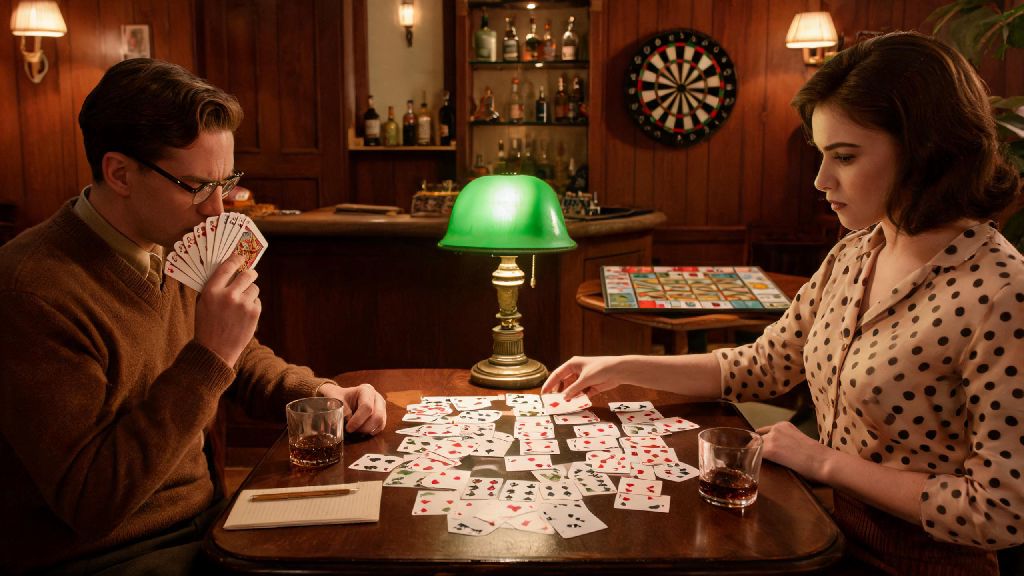
You’ve probably seen gin rummy pop up in old movies, casual game nights, or even online rummy platforms, but if you’ve never played before, you might be wondering what is gin rummy card game, and why it’s remained one of the most popular rummy variants for over a century. Unlike longer, more complex rummy games that can take hours to finish, gin rummy is fast-paced, designed for two players, and easy to pick up even if you have zero prior rummy experience. It’s equal parts luck and strategy, so you don’t have to be a pro to win your first few rounds, and it’s flexible enough to play for fun with friends or in competitive online tournaments for cash prizes.
Core Rules That Define What Is Gin Rummy Card Game
At its core, gin rummy follows most foundational rummy rules, with a few unique twists that set it apart from other variants. The game uses a standard 52-card deck, with aces worth 1 point, face cards worth 10 points, and number cards worth their face value. Each player gets 10 cards at the start of the round, and the remaining cards form a draw pile and discard pile for the duration of play. The entire goal of each round is to reduce your total “deadwood” – the value of unmatched cards in your hand – as much as possible, ideally to zero, before your opponent does.
All valid card groupings in gin rummy fall into two categories:
Unlike some other rummy variants, you don’t lay down your melds as you form them in gin rummy. You keep all your cards in your hand until you’re ready to end the round, either by knocking or declaring gin. That adds an extra layer of strategy, because your opponent won’t know what cards you’re holding or what melds you’ve built until the round ends. If you’re still wrapping your head around what is gin rummy card game after reading the rules, don’t worry – you can pick up the flow after just one practice round.
How a Standard Gin Rummy Round Plays Out
Every round starts with a dealer shuffling the deck and dealing 10 cards to both players, face down. The remaining deck is placed in the middle of the play area, and the top card is flipped over to start the discard pile. The non-dealing player gets to act first: they can either pick up the top discard if it helps them form a meld, or pass. If they pass, the dealer can choose to pick up the discard, and if both players pass, the non-dealer draws the top card from the face-down draw pile.
Every turn after that follows the same structure: you draw one card either from the top of the draw pile or discard pile, then discard one card from your hand to the discard pile. Play continues back and forth until one player decides to end the round. You can end the round by “knocking” when the total value of your unmatched deadwood cards is 10 points or less. When you knock, both players lay down all their cards, show their melds, and the opponent can “lay off” any of their deadwood cards that fit into your melds to reduce their own deadwood total.
The player with the lower deadwood total after layoffs wins the round, and earns points equal to the difference between the two players’ deadwood totals. If you knock and have zero deadwood, you’ve hit “gin”, which earns you a 25-point bonus on top of the full value of your opponent’s deadwood, and they can’t lay off any cards to reduce their total. If you knock and your opponent’s deadwood total is equal to or lower than yours after layoffs, they get an “undercut” bonus of 25 points plus the difference in deadwood totals. Most casual gin rummy games end when one player hits 100 total points, though tournament rules often set the limit at 250 points.
I’ve played rounds that end in 5 minutes flat when both players get lucky with their initial draws, and others that drag on for 15 minutes when no one can get their deadwood low enough to knock. It’s that unpredictability that makes the game so addictive for new and seasoned players alike.
Beginner-Friendly Gin Rummy Strategy Tips
One common mistake new players make when they’re first learning what is gin rummy card game is holding onto high cards hoping they’ll form a meld later. Kings, queens, and jacks are worth 10 points each, so if you can’t form a meld with them after 2-3 turns, discard them to cut your deadwood total. You’re far more likely to get stuck with a 10-point deadwood card if you hold it for the whole round, rather than discarding it early when your opponent probably can’t use it for a meld.
Pay close attention to the cards your opponent discards each turn. If they throw away a 9 of hearts, you know they aren’t building a run that includes that card, so you don’t have to hold onto an 8 or 10 of hearts to pair with it. They also might have discarded it because they already have two other 9s, so don’t hold onto a 9 hoping to form a set unless you already have two of them in your hand. Small observations like this can give you a huge edge over less attentive opponents.
Don’t rush to knock unless you’re sure your deadwood is significantly lower than your opponent’s. I’ve made the mistake of knocking with 9 points of deadwood early in a round, only to have my opponent lay down almost full melds and undercut me for a 30-point gain. If you’re close to getting gin, it’s almost always worth waiting an extra turn or two to hit that zero deadwood mark, since the bonus points are so valuable. The only exception is if you notice your opponent is about to run out of deadwood too – in that case, knocking early to avoid an undercut is a smart call.
When you’re the non-dealer, always take the first discard if it helps you form a meld right away. The first discard is the only time you get a free look at a card before your opponent, so don’t waste that opportunity if it can help you cut your deadwood early. Even if it only reduces your deadwood by 5 points, that small edge can be the difference between winning and losing the round.
Key Differences Between Gin Rummy and Other Rummy Variants
If you’ve played other types of rummy before, you’ll notice a few key differences that make gin rummy stand out. First, it’s exclusively a two-player game, unlike popular variants like Indian rummy or Rummy 500 that support 2 to 6 players. That makes it the perfect go-to game when you only have one other person to play with, and you don’t have to adjust rules for larger groups.
Unlike most other rummy variants, you don’t lay down melds as you form them during the round. That means your opponent never gets a preview of what cards you’re collecting, so you can bluff by discarding cards that look like they’d fit a meld you’re actually building, to throw them off your trail. It also means you don’t have to worry about your opponent adding cards to your melds mid-round to reduce their own deadwood before you knock.
Gin rummy also doesn’t use any wild cards or jokers, unlike many casual rummy variants that include 1 or 2 wild cards to make forming melds easier. This lack of wild cards makes gin rummy a more skill-based game than many other rummy variants, since you can’t rely on a lucky joker draw to fix a bad hand. That’s one of the main reasons it’s so popular for competitive tournament play, because skill matters far more than luck over the course of multiple rounds.
The round structure is also much faster than most other rummy variants. Most gin rummy rounds take 5 to 10 minutes, compared to 30 minutes or more for a full game of Rummy 500. That makes it ideal for quick game nights, or for playing a few rounds on your lunch break when you don’t have time for a longer game.
At the end of the day, what is gin rummy card game if not the perfect mix of casual fun and strategic depth for anyone who loves card games? It’s easy enough to learn in 10 minutes, but has enough nuance that you can keep improving your strategy for years without getting bored. Whether you’re looking for a quick game to play with a friend on a rainy day, or want to test your skills in online rummy tournaments against players from around the world, gin rummy is a fantastic choice. Start with the basic rules we covered, test out the strategy tips during your first few rounds, and you’ll be winning games before you know it.