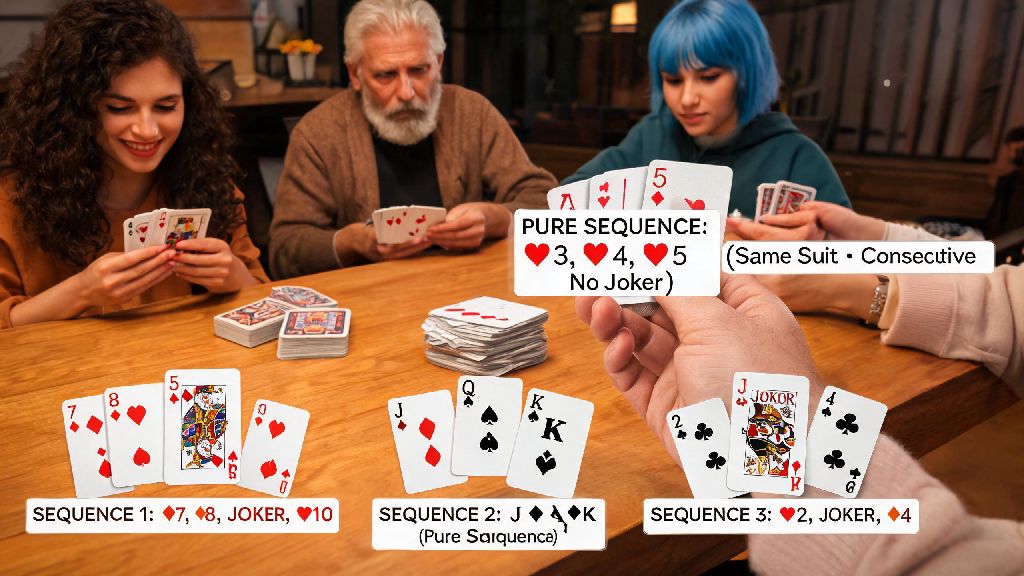
If you’ve ever sat down for a rummy game with friends and panicked when someone called your combination invalid, you’ve probably run into the pure sequence rule. Many new players skip learning this core rule first, and end up losing rounds they could have easily won if they’d gotten their combinations right. So what is pure sequence in rummy, exactly? It’s a specific set of cards that forms the foundation of every valid rummy hand, and you can’t declare a win without it, no matter how good your other sets look. It’s the first rule every new rummy player should memorize, even before you learn how to build sets or use jokers. I’ve seen dozens of new players lose tournament entry fees just because they forgot to form this one required combination first, so this guide breaks down everything you need to know to avoid that mistake.
What is Pure Sequence in Rummy, Exactly?
First, let’s break down the basics of a sequence in rummy, to avoid confusion. A sequence is three or more consecutive cards of the same suit, right? A pure sequence is that same consecutive set, but with no wild cards or jokers used to fill gaps. That means every card in the set has to be a natural, numbered or face card of the same suit, in order. For example, 5♥, 6♥, 7♥ is a valid pure sequence. 10♠, J♠, Q♠, K♠ also counts, even if it’s four cards long. But if you use a printed joker or a wild card (say, 2♦ is the wild for the round) to replace the 6♥ in that first example, that’s no longer a pure sequence.
I used to make this mistake all the time when I first started playing: I’d throw a joker in to fill a gap in my first sequence, thinking it was fine, only to get called out when I tried to declare. That’s why it’s critical to prioritize building your pure sequence before you touch any other combinations. You cannot win a standard rummy round without at least one pure sequence in your hand, no exceptions. Most online rummy platforms will automatically reject your declaration if you don’t have one, so it’s not a rule you can bend or negotiate. You’ll find that almost all rummy rulebooks list the pure sequence requirement as the first rule for valid declarations, so it’s universal across most casual and competitive games.
How to Form a Pure Sequence Fast When You Get Your First Hand
When you first get your 13 cards at the start of a round, your very first step should be to sort your cards by suit, then by number. This lets you spot consecutive cards of the same suit immediately, so you can see if you’re already halfway to a pure sequence. Most experienced players sort their hands within 10 seconds of getting their cards, and you should get in the habit of doing the same. If you already have two consecutive cards of the same suit, that’s your top priority to complete first. Don’t discard any cards that could complete that sequence, even if they look useless for other combinations.
So for example, if you have 8♣ and 9♣, hold onto both, and wait for either 7♣ or 10♣ to show up in the draw pile. Avoid discarding low or high cards of the suit you’re building your pure sequence in – you never know when you’ll pick up the middle card to complete the set. Every time you pick a new card, check first if it helps you complete your pure sequence before you think about any other combinations. If you don’t have any two consecutive same-suit cards in your opening hand, pick the suit you have the most cards of, and work on building a sequence there first. It’s okay if it takes a couple of draws to get the right cards; it’s always better to spend the first 3-4 turns building your pure sequence than to waste time building sets first that won’t count for anything if you can’t get your pure sequence later.
Common Mistakes Players Make With Pure Sequences
Even players who know what a pure sequence is often make easy mistakes that cost them games. I’ve seen these happen in casual home games and paid online tournaments alike, so watch out for these pitfalls:
Most of these mistakes are easy to avoid if you slow down for 10 seconds at the start of each round to plan your hand first. I used to rush through my turns when I first started, and I’d discard the exact card I needed for my pure sequence at least once every three games. Once I started taking that extra 10 seconds to sort my hand and mark my priority sequence, that mistake almost completely stopped. If you’re playing online rummy, the platform will usually highlight if you don’t have a valid pure sequence when you try to declare, but don’t rely on that – it’s better to know the rule yourself, so you don’t waste turns building the wrong combinations.
Why Pure Sequences Are Non-Negotiable in Standard Rummy Rules
A lot of new players ask why the pure sequence rule even exists, especially when you can use jokers for every other combination in your hand. The rule was added to prevent players from winning rounds purely by luck, just because they got a lot of jokers in their opening hand. Without the pure sequence requirement, a player who got 4 jokers could easily build all their combinations with wild cards in 2-3 turns, no skill required. The pure sequence rule forces players to rely on strategy and planning, not just lucky joker draws. That’s also why most rummy tournaments use the standard pure sequence rule to keep the game fair for all players, no matter their luck with opening hands.
The only exception is very niche rummy variants, but 99% of casual and competitive rummy games you’ll play will require at least one pure sequence to declare. Some new players try to argue that the rule is unfair when they get a bad opening hand, but it actually evens the playing field over time. If you get good at building pure sequences fast, you’ll win more games than players who just rely on getting lucky with jokers. I’ve won dozens of rounds where I only got one joker the entire game, just because I built my pure sequence in the first three turns, while my opponents were still wasting time building sets first.
At the end of the day, rummy is a game of skill first, and learning the pure sequence rule is the first step to getting good at it. You don’t have to be a pro to build valid pure sequences fast, you just have to prioritize it at the start of every round and avoid the common mistakes we covered earlier. Take the time to practice sorting your hand fast and spotting potential pure sequences before you work on any other combinations, and you’ll see your win rate go up almost immediately. Now that you know what is pure sequence in rummy and why it matters, you’re ready to jump into your next game with a lot more confidence, and avoid those embarrassing invalid declaration mistakes that trip up so many new players.