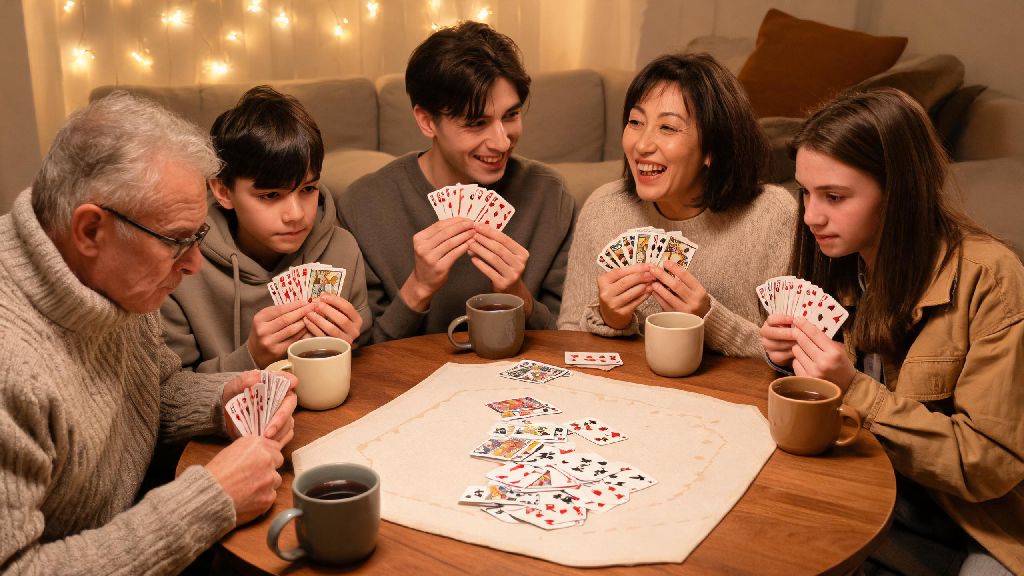
Game night with friends or family often leads to someone pulling out a standard deck of cards and suggesting a round of rummy. If you’ve never played before, your first thought is probably can you play rummy without spending hours memorizing complicated rules or having advanced card game skills. The short answer is yes, and this guide will walk you through everything you need to know to join your first game with confidence, no experience required.
Can You Play Rummy Even With No Card Game Experience?
Rummy was designed to be accessible for players of all skill levels and ages, which is why it’s remained one of the most popular card games in the world for decades. You don’t need to know any special card tricks, have a photographic memory, or be good at math to play well casually. No prior card game experience required – the only basic skills you need are the ability to recognize numbers 2 through Ace, match card suits, and follow simple turn rules.
I’ve taught dozens of first-time players to play rummy over the years, from my 8-year-old niece to my 72-year-old grandpa who rarely plays any card games at all. Most people pick up the core rules in less than 15 minutes, and they’re playing competitively (and having fun) by the second or third round. Even people who struggle with short-term memory or cognitive differences can play with small rule adjustments, like keeping a small note card with the basic meld requirements next to their seat.
Of course, if you want to play in competitive online rummy tournaments, you’ll need to learn more advanced strategies and official tournament rules, but that’s not required for 99% of casual games. Most people play rummy to hang out and have fun, not to win huge prizes, so groups are almost always willing to slow down and explain rules to new players.
Core Rules You Need to Know to Start Playing Rummy Today
While there are dozens of rummy variants, the standard 13-card rummy rules are the most common for casual home play, and they’re easy to learn. Most games use a standard 52-card deck (plus 2 jokers if you want to play with wild cards) for 2 to 6 players. The objective of the game is to get rid of all the cards in your hand by forming them into valid sets or runs, which are called melds.
A valid set is 3 or 4 cards of the same rank, but different suits – for example, three 5s (hearts, diamonds, spades) or four Queens (clubs, hearts, diamonds, spades). A valid run is 3 or more consecutive cards of the same suit, like 4,5,6 of clubs or Jack, Queen, King of diamonds. If you’re playing with jokers, they can be used to replace any missing card in a set or run.
Every turn follows the same three simple steps, no matter which variant you’re playing:
Once you’ve formed all of your cards into valid melds (you can have one leftover card to discard at the end), you can declare “rummy” and go out, ending the round. The other players add up the points from the cards left in their hand, with face cards worth 10 points, Aces worth 1 point, and number cards worth their face value. The player with the lowest total points after multiple rounds wins the game.
Simple Adjustments to Make Rummy Work for Your Group
One of the best things about rummy is that you don’t have to follow strict official rules to have fun. Most casual groups have their own house rules, and it’s completely normal to adjust the rules to fit the age range of players, the amount of time you have, or the vibe you want for the game.
If you’re playing with younger kids, you can lower the number of required melds to go out, or use more jokers to make it easier for them to form sets and runs. You can also eliminate point counting entirely, and just give a small prize to the first person to go out each round. For older players or people with vision issues, you can use large-print card decks to make it easier to read suits and ranks.
If you only have 20 or 30 minutes to play, you can play a shorter version where you only need two melds to go out, instead of the standard three or four. Casual home play has no official rulebook, so you can tweak whatever you want as long as everyone agrees on the rules before the round starts. I’ve even played rummy on camping trips with a half-broken deck, and we just made up rules for the missing cards to keep the game going.
That means if you’re joining a new group for the first time, it’s always a good idea to ask about their house rules before the game starts. Some groups let you lay down melds for other players, others don’t, some count Aces as 15 points instead of 1, so asking ahead of time will help you avoid confusion mid-game.
First-Time Play Tips to Avoid Common Mistakes
Even though rummy is easy to learn, there are a few common mistakes new players make that can cost them the round. These tips are simple to remember, and they’ll help you feel more confident your first time playing.
First, don’t hold onto high-value face cards for too long hoping to make a set. If someone else goes out early, you’ll be stuck with 10 points per face card in your hand, which can add up fast. If you’ve had a King in your hand for three turns and haven’t picked up another one, it’s usually better to discard it early.
Second, pay attention to what other players are discarding and picking up. If someone keeps picking up heart cards from the discard pile, they’re probably working on a heart run, so you don’t want to discard any heart cards you have that they might need. This is the easiest basic strategy to pick up, and it makes the game a lot more fun as you start to guess what other players are building.
Third, don’t be afraid to ask for a rule reminder mid-game. No one expects first-time players to remember every rule right away, and most people are happy to explain a rule again instead of having you make a mistake that ruins the round. You can even ask for advice if you’re not sure which card to discard, as long as the group is playing for fun and not for money.
If you want to practice before playing with a group, you can play solo rummy at home to get used to forming melds and following turn rules, or join low-stakes online rummy rooms where most players are casual and happy to play with new people. You don’t need to play for money to practice, either – most online platforms have free play modes that let you play as much as you want without any risk.
Rummy is one of the most flexible, accessible card games out there, and it’s perfect for everything from quiet nights at home to large family gatherings. Next time someone suggests a round at game night, you won’t have to wonder can you play rummy – you’ll already know the basics, and you can jump right in and have fun without any stress. The only thing you need to bring is a willingness to learn, and you’ll be playing like a pro in no time.