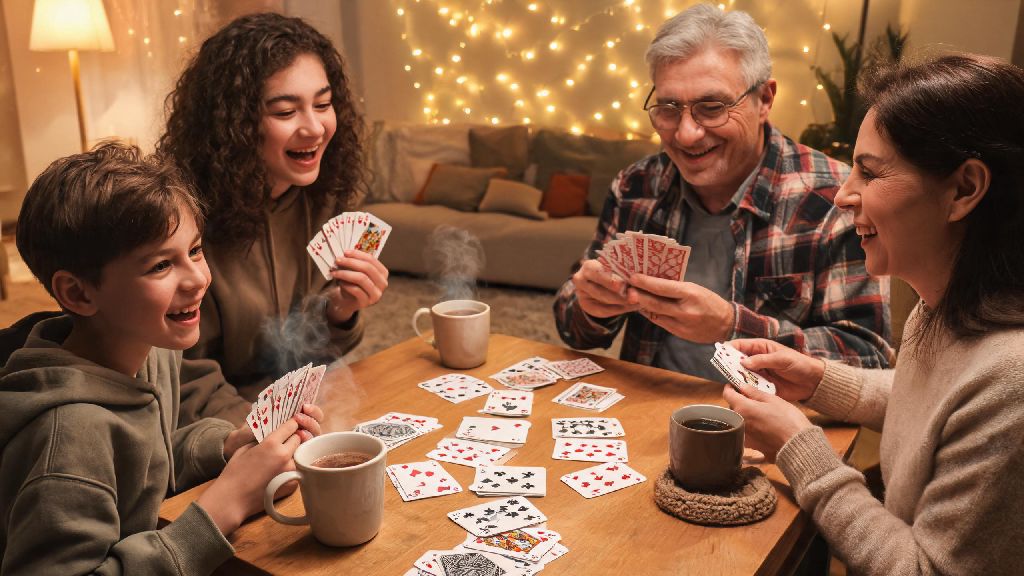
If you’ve ever sat through a family game night watching relatives laugh and banter while shuffling a deck of cards, you’ve probably seen gin rummy in action without even realizing it. This fast, low-stakes rummy variant is perfect for 2 players, takes just 10 minutes per round, and has way simpler rules than you might assume. We’re breaking down exactly how to play gin rummy card game, from setup to winning conditions, so you can join your next game night with confidence.
Gin Rummy Setup: What You Need Before Your First Round
You only need two things to start a game: a standard 52-card deck (no jokers required) and a way to track scores. Card values are straightforward: number cards are worth their face value, aces are worth 1 point, and all face cards (jack, queen, king) are worth 10 points each. If you’re playing with a new deck, take a minute to shuffle it thoroughly at least 3 times to avoid clumps of same-rank or same-suit cards.
You don’t need any special equipment to play gin rummy, just a standard deck and a flat surface to keep score. Most casual players use a small notebook and pen to track scores, but you can also use a notes app on your phone if that’s easier. Unlike group rummy variants that work for 4 or more players, gin rummy is designed exclusively for 2 people, so it’s a perfect go-to for date nights or one-on-one hangs with a friend. The dealer deals 10 cards to each player one at a time, face down, so neither player can see the other’s hand.
Turn-by-Turn Rules to Play Gin Rummy Card Game
Once all cards are dealt, the rest of the deck is placed face down in the middle of the table to create the stock pile. The top card of the stock pile is flipped over and placed next to it to start the discard pile. The non-dealer gets the first move: they can choose to pick up the top discard if it fits their hand, or pass. If they pass, the dealer gets the same choice, and if both pass, the non-dealer draws the top card from the stock pile.
Every turn after that follows the same structure: you draw one card either from the top of the stock pile or the top of the discard pile, then you discard one card from your hand to end your turn. Your goal through each turn is to build melds, which are valid combinations of cards that count towards your score. Melds fall into two categories: sets, which are 3 or 4 cards of the same rank across different suits, and runs, which are 3 or more consecutive rank cards of the same suit. Aces count as low in gin rummy, so an A-2-3 of spades is a valid run, but a Q-K-A of diamonds is not.
You don’t have to lay down your melds during the round, unlike most other rummy variants, which keeps your strategy hidden from your opponent until the end. That means you can adjust your melds as you draw new cards, and your opponent won’t be able to guess what you’re building until you decide to end the round.
How to End a Round and Calculate Scores
A round ends when one player chooses to knock, or when there are only 2 cards left in the stock pile, in which case the round ends with no points awarded to either player. You can only knock at the end of your turn, right before you discard a card, and only if the total value of your unmatched deadwood cards is 10 points or less. When you knock, both players lay their hands face up on the table. You will lay out your melds first, then your deadwood. Your opponent can then lay out their own melds, and add any of their deadwood cards to your melds if they fit (for example, if you have a set of 3 8s, they can add their 4th 8 to their melds to reduce their own deadwood total).
Once both players have adjusted their hands, you calculate the difference between your deadwood total and theirs. Gin is the highest scoring play you can make in a round, so always prioritize building full melds if you can do it without waiting too many turns. Gin happens when you have zero deadwood, meaning all 10 of your cards are in valid melds. If you go gin, your opponent doesn’t get the chance to add their deadwood to your melds, and you get a 25 point bonus plus the full value of their deadwood.
Scoring follows standard rules for most casual games, though some groups adjust bonuses to fit their preferences:
Beginner Tips to Win More Gin Rummy Rounds
You don’t need to be a professional card player to win at gin rummy, but a few small adjustments to your play style will help you win more rounds without overcomplicating things. First, stop holding onto high-value face cards for too long. Kings, queens, and jacks are worth 10 points each, so if you’ve had one in your hand for 3 turns and haven’t found a match for it, discard it as soon as possible.
Holding onto high-value face cards for a potential meld that never comes is the #1 mistake new gin rummy players make. It leaves you with high deadwood totals that make it impossible to knock early, and puts you at risk of paying out a huge score if your opponent goes gin. Second, pay close attention to the cards your opponent discards. If they throw away a 9 of clubs, that means they don’t need it for a set of 9s or a club run, so you can safely hold onto your own 9s or mid-rank club cards without worrying they’re building the same combination. You can also use this information to trick them: if you’re building a run of 5-6-7 of hearts, you can discard a 4 of hearts early to make them think you don’t need heart cards, so they’ll discard hearts they don’t want later in the round.
Third, be careful about when you choose to knock. If your deadwood is exactly 10 points, it’s usually better to wait one more turn to try to reduce it further, because there’s a high chance your opponent has lower deadwood and will undercut you. Only knock at 10 points if you’re very far behind in total score and need to take a risk to catch up. If you’re within 20 points of winning the entire game, prioritize playing aggressively to go out as fast as possible, instead of holding out for gin. A small 8 point win will get you over the finish line just as well as a big gin win, and it reduces the risk that your opponent will go out first and steal the game. One common myth about how to play gin rummy card game is that you have to win every round to come out on top. That’s not true at all. Even if you lose 3 rounds out of 5, if one of your wins is a gin with a big deadwood bonus, you can still hit 100 points first and win the whole game.
Gin rummy is one of the most accessible, fun card games you can pick up for quick game nights or lazy afternoons with a friend. You don’t need to memorize dozens of complicated rules or spend hours practicing to have a good time, and a few small strategy tweaks will help you hold your own even against players who’ve been playing for years. The best way to get comfortable is to play a few low-stakes rounds where you don’t worry about winning, just about getting used to the turn structure and meld rules. Now that you know how to play gin rummy card game, grab a deck and test out your skills in your next friendly match.