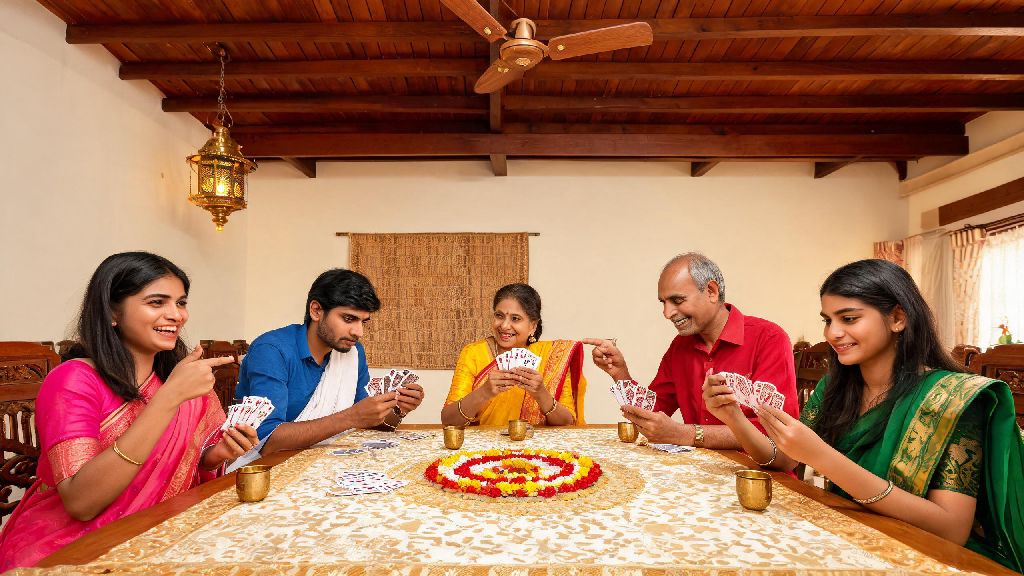
If you’ve ever sat around a dining table during Onam celebrations in Kerala and watched your family laugh, tease each other, and call out rummy declarations before you even figured out what a sequence is, you’re not alone. Rummy is one of the most beloved card games across the state, and the regional variant has small, fun twists that make it feel far more personal than generic Indian rummy. As of 2026, more people than ever are playing the game both in-person and on local gaming apps, so there’s never been a better time to learn how to play rummy malayalam. This guide breaks down every rule, tip, and safety guideline you need to start playing, no prior experience required.
Core Rules You Need to Know to Play Rummy Malayalam in 2026
First, let’s clear up the biggest confusion for new players: Malayalam rummy follows most standard 13-card Indian rummy rules, but has a few regional adjustments that are universally followed across Kerala, both at home and on official gaming platforms. The game is played with 2 standard 52-card decks plus 2 printed jokers, for a total of 106 cards. It works for 2 to 6 players, and each player gets 13 cards at the start of every round.
The core objective is the same as other rummy variants: group all 13 of your cards into valid sequences and sets before any other player, or end the round with the fewest possible points if someone else declares first. You can’t declare a win without at least one pure sequence – that’s a group of 3 or more consecutive cards from the same suit, with no jokers used. This is non-negotiable, even if all your other cards are perfectly grouped.
One key regional twist for Malayalam rummy is the open joker rule. After all cards are dealt, the dealer flips one random card face-up on top of the draw pile. All cards of that same rank, across all suits, count as jokers for that round, on top of the 2 printed jokers. For example, if the flipped card is the 7 of hearts, every 7 in the deck (spades, diamonds, clubs, and the other 7 of hearts) can be used as a wild card to replace any missing card in a sequence or set.
Points are calculated based on the value of ungrouped cards if you lose a round. Number cards are worth their face value, face cards (jack, queen, king, ace) are worth 10 points each, and jokers are worth 0 points. If you don’t have a pure sequence when someone else declares, you get a full 80 points, no matter how many other valid groups you have. That’s why building a pure sequence should always be your first priority when you pick up your hand.
Step-by-Step Gameplay Flow for First-Time Players
Once you know the basic rules, the actual gameplay is pretty straightforward, even if you’ve never played any card game before. Most 2026 online platforms automate the dealing and point counting, so you don’t have to worry about making mistakes with the admin side of the game, but it’s still good to know the flow for in-person matches with friends.
The round starts with the dealer passing out 13 cards to each player, then flipping the open joker card on top of the draw pile. The remaining cards are placed face-down next to the open joker as the closed draw pile. The player to the left of the dealer goes first, and turns move clockwise around the table.
On every turn, you have to do two things: first, draw one card, either from the top of the closed draw pile or the top of the discard pile (where players throw their unwanted cards). Then, you have to discard one unwanted card from your hand onto the discard pile, so you always have 13 cards in your hand until you’re ready to declare.
Before you hit that declare button (or announce it in person), you need to run through this quick checklist to make sure your hand is valid:
If all those boxes are checked, you can declare your hand. The other players then have to show their ungrouped cards, and points are calculated for each player. Always discard high-value cards first if you can’t form a sequence with them – holding onto a king or ace for 3 rounds hoping to get a matching set will cost you 10 extra points if someone else declares early, which adds up fast over multiple rounds.
One common mistake new players make is picking up every interesting card from the discard pile. If you see a 9 of spades that would complete your pure sequence, go for it, but don’t pick up a random queen just because you have one queen in your hand. It will give away your strategy to other players, and you’ll end up stuck with a high-value card you can’t use.
Beginner-Friendly 2026 Tips to Win More Rummy Malayalam Matches
You don’t have to be a pro to win most casual rummy matches. I’ve played at dozens of family gatherings and online free tournaments over the past year, and the biggest difference between new players who win consistently and those who don’t is just paying attention to small details, not having some fancy secret strategy.
Keep track of the cards your opponents discard – this is the easiest way to figure out what sequences they’re building, so you don’t discard a card they need to win. For example, if you see one player discard two 8s in a row, you know they’re not building a set of 8s, so you can safely discard your extra 8 without worrying about helping them.
Use jokers only for impure sequences or high-value sets – don’t waste a joker on a set of 3s, for example. You can easily pick up another 3 from the draw pile over a few rounds, but you might not get the card you need to complete a sequence of face cards, which would save you 30 points if someone declares early.
Don’t be afraid to drop a round if your hand is really bad. If you pick up your 13 cards and have no consecutive cards of the same suit, and only one pair of matching ranks, it’s almost impossible to form a valid hand before someone else declares. You can drop the round before you make your first move for only 20 points, which is way better than losing 80 points for not having a pure sequence later.
As of 2026, almost all local rummy apps have free practice rooms where you can play with no stakes against other new players. I always recommend new players spend at least 5 hours in these practice rooms before joining any paid matches. You’ll make all your silly mistakes there for free, instead of losing money on them. Also, try playing with different strategies: sometimes prioritizing sets first works, sometimes prioritizing both sequences first works, and you’ll figure out what fits your play style best with practice.
Important 2026 Guidelines for Playing Rummy Malayalam Online
Online rummy has exploded in popularity in Kerala over the past few years, and 2026 saw updated state regulations that make it safer than ever to play, as long as you follow a few basic rules to protect yourself. First, Malayalam rummy is classified as a skill-based game under Kerala’s gaming laws, so it’s completely legal to play for real money as long as you’re over 18 years old.
Never share your account login details with anyone, even close friends – most reputable platforms have strict one-account-per-user rules, and if someone else uses your account to make unauthorized transactions, you won’t be able to get your money back. Also, make sure the platform you use is registered with the Kerala Gaming Authority, so you know your personal and financial data is protected.
Set a monthly budget for paid rummy matches and stick to it – it’s really easy to get caught up in the excitement of a close match and spend more than you intended. Most 2026 apps have built-in budget limit tools that lock you out of paid matches once you hit your set limit, so take advantage of those to keep the game fun instead of stressful.
You don’t have to play for real money to have fun, either. A lot of platforms host free weekly tournaments with prizes like local restaurant vouchers, Onam gift hampers, or movie tickets that are perfect for casual players who just want to play for fun and win small rewards. Avoid platforms that pressure you to deposit more money to access better tournaments, those are usually predatory and not worth your time.
Also, be respectful in online chat rooms. A lot of players use rummy apps to connect with other people from Kerala who share their love of the game, so don’t be rude to other players if you lose a match. It’s just a game, and the point is to have fun, not win every single round.
At the end of the day, rummy is all about spending time with people you care about, and the Malayalam variant’s small regional twists make it feel like a game that’s made for our community. Once you get the hang of the core rules, figuring out how to play rummy malayalam is super intuitive, and you’ll be declaring wins at your next family gathering in no time. Take it slow, start with practice matches, and don’t stress too much about winning every round – the best part of the game is the time you spend playing, not the points you earn.