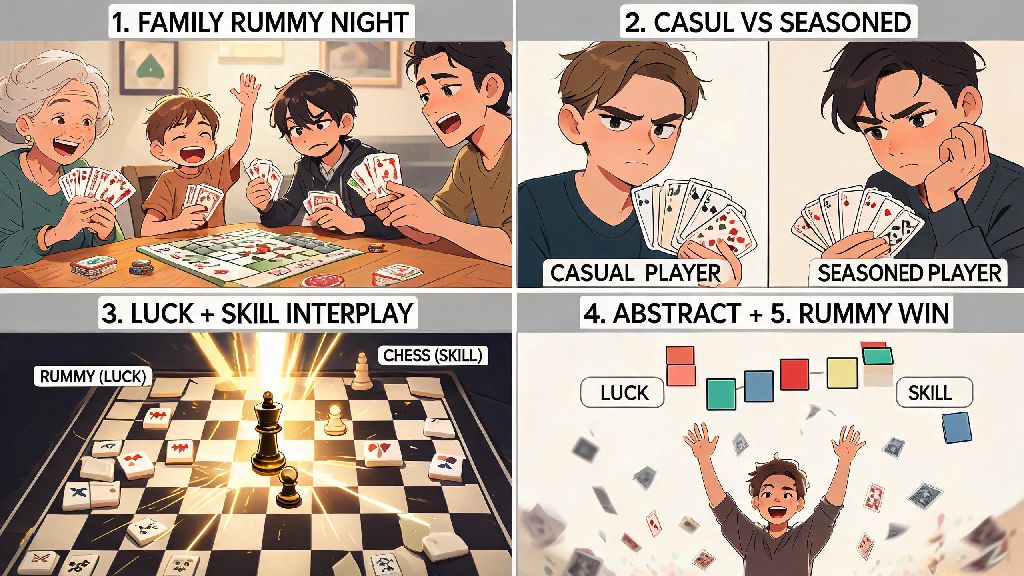
If you’ve ever sat through a family rummy night where your cousin wins three games in a row and swears they’re just “lucky,” you’ve probably wondered: is rummy a game of skill or just another casual chance-based pastime? I’ve been in that exact spot, arguing for 20 minutes after a loss that my cousin was definitely using strategy instead of just getting good cards, so I know how heated this debate can get. For decades, this question has sparked conversations at dining tables, online rummy forums, and even courtrooms across the world, since the classification directly impacts whether the game can be played for cash prizes in most regions. You don’t have to be a professional rummy player to spot the difference between random luck and deliberate decision-making, but breaking down exactly how skill factors into consistent wins takes a closer look at how the game works, what separates top players from casual ones, and how regulators draw the line between skill and gambling.
Is Rummy a Game of Skill? Breaking Down Core Game Mechanics First
When people ask is rummy a game of skill, the first place to look is the basic structure of a standard 13-card rummy round. The only part of the game that is entirely random is the initial shuffle and deal of cards. Every single choice you make after that point directly impacts your chance of winning, from which deck you draw a card from to which card you discard at the end of your turn. The initial shuffle and deal are the only parts of rummy entirely out of a player’s control, and even a bad initial hand can be salvaged or minimized with the right choices.
For example, if you get a hand with almost no overlapping cards to build required sequences, you can choose to drop the round early for a small 20-point penalty instead of playing through and losing a full 80 points if you can’t complete your hand before another player wins. That call has nothing to do with luck, and everything to do with reading your hand and assessing risk correctly. Even casual players make these calls every round, often without realizing they’re using learned skill instead of guessing.
It’s true that luck can win you a single round of rummy, even if you’re a new player. You might get a perfect initial hand, or draw exactly the card you need on your first turn to finish your sequences before anyone else. But if you play 100 rounds, those random lucky breaks will even out, and the player with stronger decision-making skills will end up with the better record almost every time.
Key Skill Sets That Directly Impact Rummy Win Rates
Top rummy players aren’t just lucky—they’ve spent years refining specific skills that give them a consistent edge over casual players. These skills are learnable for anyone willing to put in practice time, and they’re the main reason rummy is classified as a skill game by most regulators and gaming authorities. The most impactful skills for rummy success include:
Recent surveys of top online rummy tournament players show that 82% of players who have competed for 3+ years have a consistent win rate of 55% or higher, which is statistically impossible for a pure chance game. In pure chance games like slots or roulette, every player’s win rate hovers around the house edge over time, no matter how long they play. The fact that long-term rummy players can consistently maintain above-average win rates is clear proof that skill drives outcomes.
You don’t have to master all these skills at once to see improvement. Even learning basic probability and when to drop bad hands can boost your win rate by 10% or more within a few weeks of practice, which is another sign that skill, not luck, is the main driver of results.
Legal Precedent: How Regulators Classify Rummy Globally
The question of whether rummy is a game of skill isn’t just a casual debate—it has real legal implications for anyone who wants to play for cash prizes. Most countries and regions draw a clear line between games of skill, which are exempt from gambling restrictions, and games of chance, which are regulated as gambling. This legal precedent is one of the strongest official confirmations that when regulators evaluate is rummy a game of skill, they find that skill is the dominant factor.
In India, for example, the Supreme Court has repeatedly ruled that rummy is a skill-based game, so playing for cash prizes is legal in most states, as long as platforms follow fair play rules. In the United States, state laws vary slightly, but 47 states classify rummy as a skill game, allowing casual cash play without gambling licensing requirements for private games. Regulators almost always require that skill is the dominant factor determining outcomes for a game to be classified as non-gambling, and rummy passes that test almost universally.
There are exceptions, of course. A small number of regions classify all card games as gambling regardless of skill, so it’s always smart to check local rules before you play rummy for cash prizes. But these exceptions are rare, and most official rulings back up the idea that rummy is first and foremost a skill game.
How to Build Your Rummy Skill Set for Better Long-Term Results
The best part about rummy being a skill game is that anyone can get better with intentional practice, even if you’re a total beginner. You don’t need to be a math genius or have a photographic memory to become a strong rummy player—small, consistent practice sessions are enough to see real improvement over time.
Start with free, low-stakes games to practice basic skills without risking money. Most online rummy platforms have free play modes that let you play against other players of similar skill levels, so you can test out new strategies without pressure. Even 15 minutes of practice a day can boost your win rate by 10-15% within a month, according to data from top online rummy platforms, as you build familiarity with common hand combinations and decision points.
Track your games to spot patterns in your play. If you notice you lose most rounds when you refuse to drop a bad hand, that’s an easy fix to cut down your losses immediately. You can also watch short tutorials from top tournament players to pick up advanced tricks, like bluffing by discarding cards that make opponents think you’re building a different sequence than you actually are.
Don’t chase losses if you have a string of bad rounds. I’ve seen so many new players blow their entire game budget trying to win back money after a few unlucky hands, and that’s a mistake even experienced players make occasionally. If you’re feeling frustrated, step away for an hour or a day instead of making reckless plays out of anger. That single habit will save you more money than almost any other rummy strategy you can learn.
At the end of the day, the short answer to whether is rummy a game of skill is a resounding yes, with luck only playing a small role in individual short-term rounds. That doesn’t mean you’ll win every game even if you’re highly skilled, of course—bad card deals can sink even the best player’s round occasionally. But over dozens or hundreds of games, the player with stronger skill sets will almost always come out ahead, which is the clearest sign that skill is the dominant factor in the game. Whether you play for fun with family, compete in casual online tournaments, or just want to stop losing to your cousin every game night, focusing on building core rummy skills will give you far better results than relying on random luck.